Understanding Air Scrubbing Challenges in Cocoa Inside Commercial Buildings
Commercial buildings in Cocoa operate in a demanding environment. Between coastal humidity, heavy summer storms, and year-round HVAC use, indoor air systems work constantly. When water intrusion or elevated humidity affects a commercial space, air scrubbing often becomes part of the recovery plan.
But air scrubbing inside commercial buildings isn’t as simple as placing a machine in the corner and turning it on. In Cocoa’s humid coastal climate, there are real logistical and environmental challenges that property managers need to understand.
Why Commercial Buildings in Cocoa Face Air Quality Challenges
Commercial structures behave differently than homes.
In Cocoa, common contributors include:
- Large roof surface areas exposed to storm-driven rain
- Flat or low-slope roofing systems
- Complex HVAC duct networks
- High occupant traffic
- Continuous door opening and closing
- Coastal humidity infiltrating through building envelopes
When hidden water intrusion occurs — even minor — airborne particles can circulate quickly through larger spaces.
In offices, retail spaces, medical buildings, or light industrial facilities, air moves farther and faster than in a residential setting.
What Air Scrubbing Actually Does in Commercial Settings
Air scrubbing uses HEPA filtration systems to remove airborne contaminants such as:
- Mold spores
- Fine debris from water damage
- Dust disturbed during remediation
- Microscopic particulates
In commercial buildings, air scrubbers are often used to:
- Control contamination during mold remediation
- Improve indoor air quality after water intrusion
- Reduce airborne spread during demolition or repairs
- Stabilize air while structural drying is underway
However, the scale of the building introduces new variables.
Challenge 1: Large Open Floor Plans
Many Cocoa commercial properties feature:
- Open office layouts
- Retail showroom floors
- Warehouse-style ceilings
- High ceilings with exposed ductwork
Large open spaces require:
- Multiple air scrubbers
- Strategic placement for air exchange
- Proper airflow mapping
One unit is rarely sufficient.
Professionals must calculate air changes per hour (ACH) to ensure effective filtration across the entire affected zone.
Challenge 2: Complex HVAC Systems
Commercial HVAC systems are far more extensive than residential ones.
They may include:
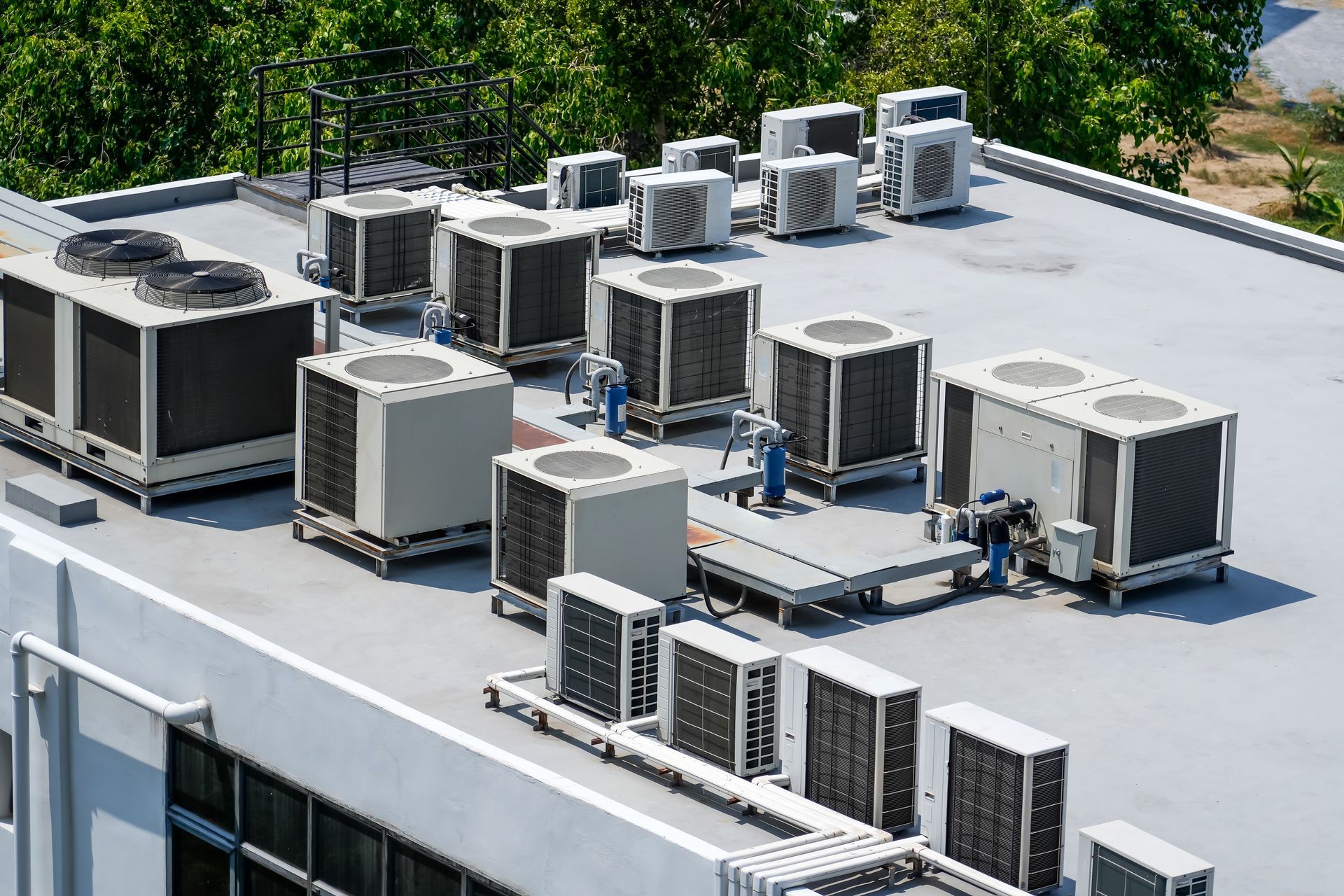
- Rooftop package units
- Multi-zone systems
- Long duct runs
- Return air pathways spanning large areas
If moisture intrusion affects ductwork or air handlers, contamination can circulate building-wide.
Air scrubbing must often be coordinated with:
- HVAC shutdown or isolation
- Duct inspection
- Controlled airflow management
Without HVAC coordination, air scrubbers may compete with mechanical systems instead of working effectively.
Challenge 3: Ongoing Business Operations
Unlike homes, many commercial buildings in Cocoa remain operational during remediation.
That introduces challenges such as:
- Occupant safety
- Noise control
- Limited access to certain zones
- Scheduling around business hours
- Minimizing disruption
Air scrubbers create airflow and sound. Proper containment and negative air setups must protect unaffected areas.
Professionals must design containment systems that isolate affected spaces without disrupting the entire facility.
Challenge 4: Coastal Humidity Complicates Filtration
Cocoa’s humidity directly impacts air scrubbing performance.
When indoor air is already saturated:
- Filtration efficiency can be affected
- Airborne moisture can carry particulates farther
- Drying and air scrubbing must work together
That’s why commercial air scrubbing often runs alongside industrial dehumidification.
Air scrubbers remove particles. Dehumidifiers remove moisture.
In a coastal environment, you need both.
Challenge 5: Hidden Moisture Behind Commercial Walls
Commercial walls often contain:
- Metal framing
- Insulation layers
- Utility chases
- Large window systems
Water intrusion during storms can travel vertically inside wall cavities.
If those areas aren’t dried properly first, air scrubbing alone won’t solve the problem.
Moisture detection and structural drying must precede or accompany air scrubbing.
Teams experienced in Brevard County conditions, such as Inspections and More FL, understand how Cocoa’s storm patterns affect commercial envelope systems.
Challenge 6: Multi-Tenant Buildings
In multi-tenant properties, such as office plazas or retail centers:
- Airflow may be shared
- Walls may connect above drop ceilings
- HVAC systems may serve multiple units
Air scrubbing in one suite may require coordination with neighboring tenants.
Containment and pressure control become critical to prevent cross-contamination.
How Professionals Approach Air Scrubbing in Cocoa Commercial Buildings
A structured plan makes the difference.
Step 1: Moisture and Air Quality Assessment
Professionals evaluate:
- Source of water intrusion
- Extent of affected areas
- HVAC involvement
- Humidity levels
- Airflow patterns
Thermal imaging and moisture meters confirm whether structural drying is needed first.
Step 2: Containment Design
Affected areas are isolated using:
- Plastic containment barriers
- Negative air pressure setups
- Controlled access points
This prevents airborne particles from spreading throughout the facility.
Step 3: Equipment Sizing and Placement
Air scrubber quantity is calculated based on:
- Cubic footage of affected space
- Desired air changes per hour
- Severity of contamination
Units are positioned to create efficient circulation rather than dead air zones.
Step 4: Integration With Dehumidification and Drying
Air scrubbers are paired with:
- Industrial dehumidifiers
- Air movers
- Structural drying equipment
This combination stabilizes both air and materials.
Step 5: Monitoring and Verification
Professionals monitor:
- Humidity levels
- Airflow patterns
- Filtration runtime
- Moisture stabilization
Equipment runs until air conditions and materials meet acceptable levels.
Long-Term Protection Strategies for Cocoa Commercial Properties
After air scrubbing and drying, property managers should focus on prevention.
Practical strategies include:
- Routine roof inspections
- HVAC system maintenance
- Monitoring indoor humidity (45–55% target range)
- Inspecting roof drains and flashing
- Sealing envelope penetrations
- Scheduling periodic moisture evaluations
Commercial buildings in nearby Merritt Island and Melbourne face similar humidity exposure, but Cocoa’s mix of coastal air and fast-moving inland storms increases envelope stress.
Preventative maintenance reduces repeat air quality issues.
Why Local Experience Matters in Commercial Settings
Air scrubbing inside commercial buildings in Cocoa requires understanding:
- Coastal humidity cycles
- Storm-driven intrusion patterns
- HVAC airflow complexity
- Salt air corrosion impacts
- Large-space air exchange calculations
Without local experience, equipment may be undersized, poorly placed, or operated without addressing humidity.
Proper air scrubbing supports — not replaces — structural drying and moisture correction.
A Practical Perspective for Cocoa Property Managers
Air scrubbing inside commercial buildings is a powerful tool — but it works best as part of a structured recovery strategy.
In Cocoa’s humid coastal climate, airborne contamination and moisture often go hand in hand.
When properly integrated with containment, drying, and HVAC coordination, air scrubbing protects:
- Indoor air quality
- Structural materials
- Tenant comfort
- Long-term property value
In commercial settings, managing air is just as important as managing water.